dollshow

dollshow

AUSTIN DOLL COLLECTORS SOCIETY

The Austin Doll Collectors Society is an organization of antique, vintage, and modern doll collectors, dealers, and artisans. We meet on the second Sunday of each month and our meetings are fun and educational. We begin with refreshments and socializing, and, following our brief business meeting, there is a special doll-related program and "show and tell." The Austin Doll Collectors Society is a nonprofit organization and is a member of the United Federation of Doll Clubs.

Saturday, August 31, 2024

August 11, 2024, Meeting

Members Jenell Howell and Myrna Loesch gave a report on the United Federation of Doll Clubs Convention, held July 23rd through the 27th in Kansas City, Missouri. 

Jenell's convention find was this dashing Puss in Boots by doll artist John Wright.

Myrna shared the convention souvenir doll, "Miss Unity" designed by Helen Kish,

this all-bisque reproduction doll by Darlene Lane from the Fourth of July Luncheon, 

this fashionable femme from the Doug James 1470 line with multiple detailed outfits and accessories (the doll is a James' interpretation of the antique Mold 1469 by German maker Simon and Halbig), and

this vintage composition Madame Alexander Madelaine Du Bain she found in the convention sales room.

Also in keeping with the convention's Wizard of Oz "There's no place like home" theme is this Connie Lowe doll dressed as Dorothy.

The 2025 convention will be in Norfolk, Virginia, home to the Barry Art Museum and its collection of dolls and automatons.

Member Sharon Weintraub shared her purchases from the sales room. The spotted dog is "Rag," an all-bisque dog designed by Georgene Averill, who joins his companion, "Tag," the white kitten already in her collection. The little antique china doll has a squeaker in its cloth torso.

Member Elaine Jackson displayed this souvenir doll, Rosita, from the 1984 convention in San Antonio. 

Member Sylvia McDonalds shared these two Käthe Kruse dolls from previous conventions. This is "Fritzel," a special limited edition doll made for the 2000 convention.


Gretel was made for the 2007 convention. She is stuffed with reindeer hair and is dressed in a traditional Austrian outfit.


Member Jan Irsfeld displayed this Madame Alexander Cissy doll in an elaborate equestrian outfit.


This vintage Cissy belongs to Member Pam Hardy. Jan made the dress and Myrna her shoes.


Member Elaine McNally shared this charming cherub.


Saturday, July 27, 2024

July 14, 2024, Meeting

Elaine Jackson did a program on Black cloth dolls. She used as a reference the catalog for “No Longer Hidden,” an exhibit at the Harvard Historical Society museum in 2007. The dolls were from the collection of Pat Hatch and the exhibit and book were by Robin Campbell. 

Elaine noted that Black dolls have never been common. She explained that two factors made the development of Black cloth dolls possible, the production by cotton mills that made cotton fabric widely available and the invention of the sewing machine, which started to become commonplace in houses by the 1870s and made sewing clothing at home more convenient and affordable. Elaine said that subsequently bags of rags and fabric scraps became more common and could be used for everything from cleaning, creating rag rugs, to sewing cloth dolls. She explained that there few commercially made Black dolls, so many cloth Black dolls were made at home.  Elaine stated that Black cloth dolls can be broken down into three eras. The earliest dolls, 1870 to 1890, were one-of-a-kind creations and beautifully made. These dolls are well proportioned and dressed, and often have applied ears and noses, as well as inset eyes. They were stuffed with bran, hay, or horsehair. During the second period, 1890 to 1910, as the dolls because popular and as more people made them, the quality began to decline. Shoe button eyes were often used at this time. Finally in the third period, the dolls became simpler and cruder with less individuality. They were stuffed with lighter material, such as cotton. Patterns became available in magazines. In the 1930s through 1950s, there were patterns for making “Mammy” dolls using bottles or jars or as toaster covers. 

Elaine said that late in the first period to early in the second period, Julia Beecher created the Beecher babies, which had black stockinette faces with needle-sculpted features and eyes of black beads with the whites made from shell. This doll is an artist's interpretation of a Beecher baby.


Elaine told the club that this doll is probably one of the oldest in her collection. At one point she wore a bandana to cover her head.


This sweet set of sisters is from the 1920s or so. The blue dress and pinafore are original. The other doll has a pink replacement dress and a headdress made from a child's handkerchief.


This simple cloth doll was made as a craft project by students at Berea College in Kentucky. Elaine said that the college was founded in the 1850s as an integrated institution and that the students farmed and made crafts to pay their tuition. She stated that the school still has a craft store. This doll was created in the 1980s, but is based on an older pattern.


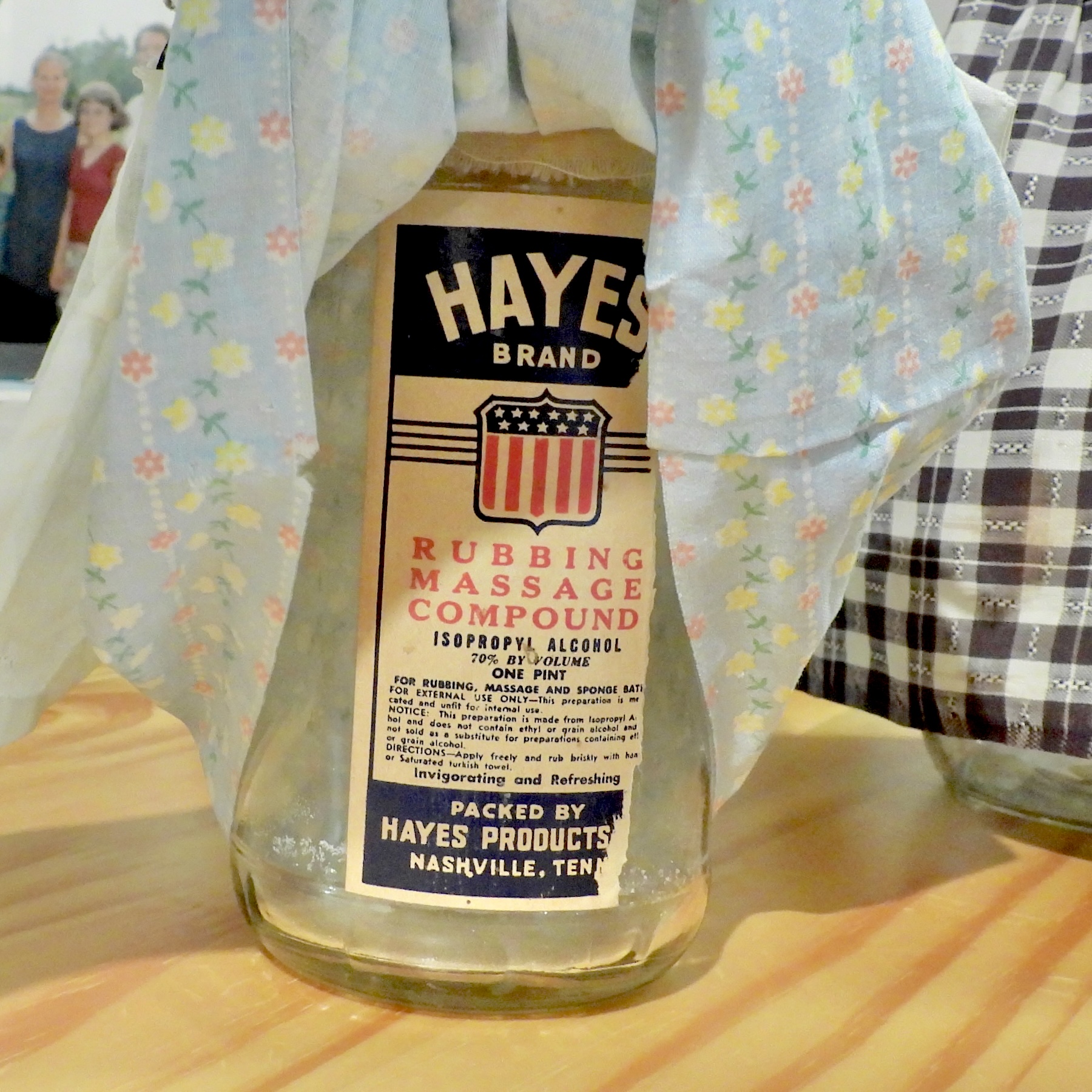
This is an example of a bottle doll. Magazines printed patterns for such dolls from the 1930s through the 1950s.


Her skirt hides a vintage bottle for rubbing alcohol.


Another bottle doll from Elaine's collection.


This little girl is made from a later pattern which formed a face with seam down each cheek. She was sold as a souvenir for New Orleans,


Elaine said that this doll was a gift from a friend. The doll was commercially created as a decorative item in the 1970s and resembles Beloved Belindy, a character from the Raggedly Ann book series, 


This is Heather Matilda Miranda McGee, a homemade rag doll Elaine found in an antique shop in the 1980s. She is wearing a baby dress from the 1930s.


This cloth doll is a souvenir from the Caribbean. In the 1950s, such handcrafted creations were replaced by plastic dolls.


Member Bette Birdsong shared this doll she found in an antique shop in the 1960s. She said the doll probably dates from the 1930s.


Member Sharon Weintraub displayed a cloth topsy-turvy doll patented by the American firm of Albert Bruckner in 1901, with a Black doll on one side and a white doll on the other. This felt doll was commercially made in Italy by one of the competitors to the famous Lenci factory, such as Magis or Eros.


Member Pam Hardy shared this rag doll from the 1920s.


This cloth and wood black bunny belongs to member Sylvia McDonald.


Member Jan Irsfeld shared this character doll of mathematician Katherine Johnson made by Mattel.


Member Kenneth Reeves displayed this cute cloth doll by the Canadian company of Bamboletta. He said that the Waldorf-style doll was custom made for his niece from natural materials. 


Member Myrna Loesch shared her new book on Cissy dolls created by Madame Alexander.


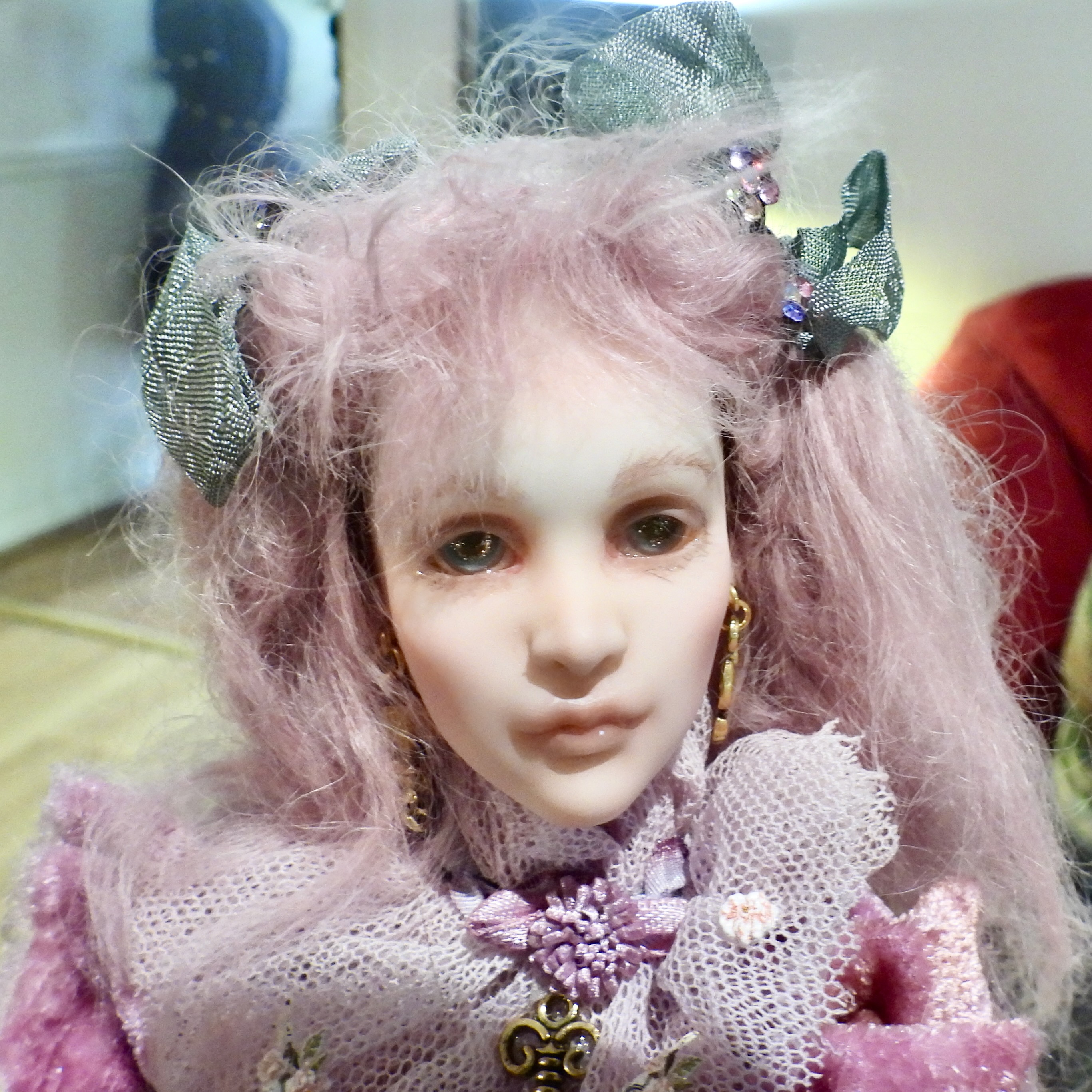
Member Jenell Howell displayed two dolls she acquired at the recent BJD convention in Austin. This doll is a one-of-a-kind 3D printed creation.


This wistful child is by artist Rose Bbflockling.


Wednesday, July 24, 2024

A Big Help

These three pairs of beautiful porcelain dolls were donated by our club as "helpers" for the United Federation of Doll Clubs Convention (UFDC) now taking place in Kansas City (the helpers are used to raise funds for UFDC; attendees buy tickets and them place them in a box in front of the items they hope to win). These one-of- kind dolls were created by Lillian Chiko Vandermast (7/29/1928-1/24/2013). She grew up in New Jersey, but moved to Texas in 1955. Lillian called Austin home until the late 1970s, when she and her husband retired and moved to Cedar Creek, Texas. Lillian's love of doll-making became her passion in the late 1970s. In the early 1980s, she established Lill-Len Dolls and traveled to doll shows across the U.S. to display her art, winning many ribbons for her creations. She became a certified Master in porcelain doll-making.and crafted every aspect of her one-of-a-kind dolls, from pouring, firing, refining, painting, and assembly, to the original costume. The pairs are part of her "Heritage Dolls" series, commemorating her family’s history: Hungarian/Czech (her side) and Scottish and Dutch (husband’s side). These unique dolls wear authentic historic costumes.


Monday, June 24, 2024

June 9, 2024, Meeting

Member Sharon Weintraub did a program on Hertwig and Company half-bisque and all-bisque doll families. She said that Hertwig was founded in 1864 in the city of Katzhutte, Germany, producing porcelain and earthenware items, including dolls. By the 1880s, it was the main employer in Katzhutte. Hertwig was generous to its employees, providing them health insurance, banking services, and even a swimming pool. 

Sharon told the members that in 1910, Hertwig received a patent for a dollhouse doll with a bisque torso and head. Slots in the shoulders allowed the insertion of fabric arms ending in bisque hands and the dolls had cloth legs with bisque feet. In 1914, these half-bisque dolls were featured in the company's anniversary catalog. She displayed one set that represented a peasant family, including the grandfather and grandmother, the mother and father, a young son and daughter, and a maidservant. The adults were only available in sets, but the children could be purchased separately and came in a variety of sizes. For this reason, the adults dolls are much harder to find. Hertwig was very clever when it came to cutting costs, so the dolls' cloth arms doubled as their sleeves and the fabric lower bodies as the men's pants (the girls and women came in simple cloth skirts and aprons). Sharon noted that collectors have often updated the dolls' outfits by adding sleeves and fancier outer garments, as with the little girl doll in this set.


She also displayed a pair of half-bisque dolls known to collectors as the “city children” because they have fancier molded clothing. There were no adults in this set. Like the country children, these dolls came in a variety of sizes and even as shoulder head dolls. 


Sharon displayed a doll with a city girl shoulder head that had belonged to friend. The friend's mother had found the doll in a trash bin in the 1930s and later gave it to her when she was a little girl. 


The doll is on the typical Hertwig cloth body with bisque lower arms and china lower legs. Both French and German makers sometimes placed heads on elongated bodies so that they could advertise the doll as a larger size and give buyers the impression that they were getting more doll for their money.


Sharon shared other family sets of dolls created by Hertwig. One consisted of eight tiny all-bisque dollhouse dolls in their original box, ranging from the grandparents to two children. An old note in the box dated the dolls to “circa 1926-1927.” She explained that these dolls were made of precolored bisque. Originally the slip used for bisque has white and the complexion coat had to be padded on and refired; around WWI, German companies began experimenting with a precolored bisque that already had a pink tint, saving the step of complexion coating. Hertwig extensively used precolored bisque for its all-bisque dolls and novelties, often going a penny-pinching step farther and cold painting the features, rather than firing them in, so that they may wear or wash off over time. 


She also displayed this all-bisque dollhouse family of a father, mother, and son in their original clothing and still attached to their display card; she noted that the set should have also included a little girl, but the card was torn and that doll was missing. 


Sharon said that Hertwig was very skilled at creating cute outfits from inexpensive materials to make its dolls more appealing to consumers. She passed around a pair of boy and girl all-bisque dolls dressed in their original matching outfits of felt and rayon ribbon as examples. 


Sharon told the club that Hertwig often created dolls in boy and girl pairs. She displayed a matching all-bisque boy and girl, jointed at the shoulders, in molded outfits from the 1910s. As is often typical of Hertwig pairs, their side glancing eyes are painted so that they are looking at each out. Sharon also shared two all-bisque girls, one in a molded cowboy costume and the other dressed in a Native American outfit; she told the club that there were matching boy dolls, but she had not yet been able to add examples to her collection.


This little precolored all-bisque boy and girl are dressed in their original net bathing suits. 


Also in their all-original outfits is this pair of tiny Black all-bisque dolls. 


Member Jan Irsfeld bought this Dollikin by Uneeda Doll Company. She told the club that when she was a child she wanted a Cissy fashion doll by Madame Alexander, but her parents bought her a less expensive Dollikin instead. Jan bought this doll to replace her childhood doll and restored and redressed it. 


Member Elaine Jackson shared her newest acquisition, a Sunny Sue Bendy doll designed by Joseph Kallus. She has the matching boy, Sunny Sam, already in her collection.


Member Kenneth Reeves shared this beautiful composition by Madame Alexander of the child movie star Margaret O'Brien. The doll is all original. 


Member Sylvia McDonald brought this boy and girl pair,  two ceramic choir singer figurines.


Member Kathy Tovo displayed these two charming primitive dolls. The larger one is wood and cloth and the smaller doll has a composition head.